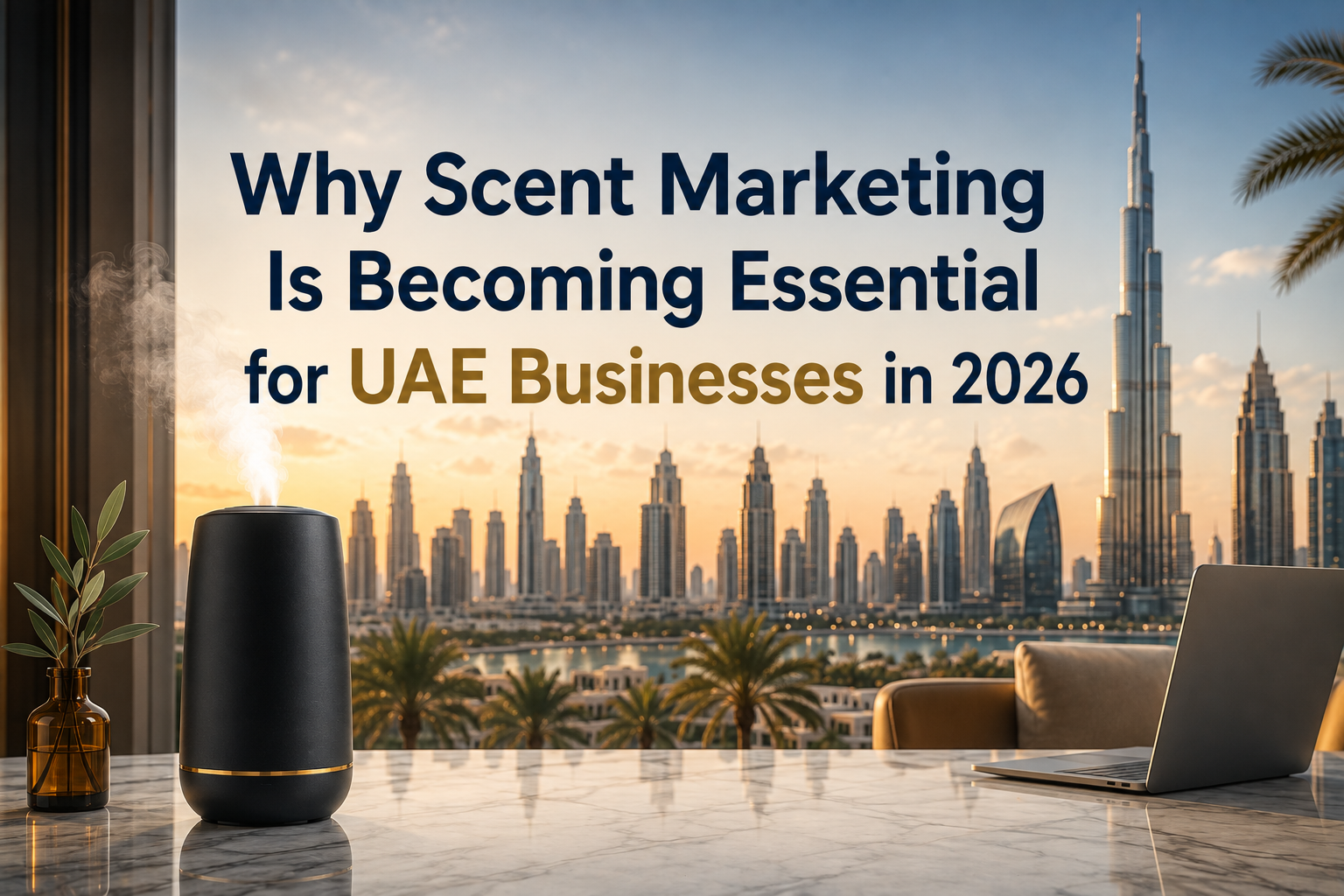
The modern commercial ecosystem within the United Arab Emirates (UAE) have transformed and moved on from conventional audio-visual elements and sensory stimuli, this shift urged business enterprises to embrace sophisticated sensory marketing strategies that aligns with the modern consumer. Today, environmental scenting is no longer a unique luxury experience employed by multi-national brands, It has now become one of the foundations of businesses across the region, building customer loyalty and fostering brand recognition.
In this blog, Atmocare, a leading scent marketing enterprise in Dubai, tells you why it is important for businesses in the UAE to invest in scent marketing and olfactory branding and how it boosts brand loyalty and drives commercial success
As industrial competition gets tougher in metropolitan pockets like Dubai and Abu Dhabi, business organizations are increasingly coming to terms with the fact that physical stores, corporate highrises, and hospitality centers must consistently engage multiple human senses to capture customer attention and earn the loyalty of discerning consumers. This strategic realignment is substantially reinforced by the region’s deep-seated heritage and cultural appreciation for exquisite fragrances and enchanting aromas, as a matter of fact, organizations in the retail and service domain have realized that integrating fragrances machines and fostering olfactory engagement is also a vital part of the overall customer experience.
As a result, experiential marketing by utilizing ambient scenting strategies play an important role in reshaping customer behaviour, promoting brand positing, boosting brand recognition and overall commercial success in the United Arab Emirates.
Consumer Psychology and Emotional Connect
According to various studies and research in consumer psychology, a human being’s sense of smell is directly related or wired to the limbic system, the brain structure that is responsible for processing emotions and creating long-term memories. When customers set their foot inside a commercial enterprise in the UAE, their subconscious mind has already formed an opinion before they could visually observe and process the space. A sensory verdict purely driven and dominated by the ambiance and atmospheric impressions of that environment. Business organizations that harness the power of automatic fragrance diffusers in the UAE find themselves capable of evoking targeted emotional responses, ranging from soothing relaxation in high-end spas to peak cognitive engagement in high-volume retail stores and bustling commercial environments. This subtle and invisible branding successfully navigates the tight corners of rational thinking and elite skepticism, and paves way for the formation of an emotional bond between the consumer and the business organization. Since the natives of the UAE are accustomed to exceptional personal fragrances and sophisticated perfumes, subpar and mediocre environments are often given a blind eye and spaces that offer a heightened sensory experience are given preference.
Commercial Advantages of Scent Marketing
Incorporating sensory branding in retail spaces and high-traffic hubs drives evidential and measurable commercial advantages that directly impact and influence dwell time, the projected value of a product, sales conversion and revenue generations across a wide variety of sectors and industries. Many core operational advantages are still being adopted at a large scale among progressive and visionary companies that function within the highly competitive commercial ecosystem of the UAE.
Extended Dwell Times: Thoughtfully designed soothing scents motivate people to hang around in retails stores for longer periods of time. Directly boosting in-store circulation rates and fostering impulse buying.
Enhanced Brand Differentiation: Integrating unique scents via fragrance machines in Dubai can play a vital role in solidifying corporate brand identity and harnessing customer loyalty. They also help businesses to elevate their retail experience and rise above competition in a congested commercial environment like the UAE.
Elevated Perceived Quality: More often than not, premium olfactory atmospheres subconsciously indicate that the products are of top quality or offer exceptional service, thus allowing brands to justify and substantiate their elevated pricing.
Neutralization of Negative Odors: Due to the advent of highly advanced HVAC-integrated diffusion technology, retail spaces and commercial hubs can now effectively eradicate unnecessary ambient aromas, allowing them to maintain a refined olfactory profile in an environment that witnesses high footfalls regularly.
Room for Rapid Customization
Beyond conventional retail and hospitality environments, corporate offices, hospital complexes, and automobile dealerships across the United Arab Emirates are actively integrating customized sensory architectures and scent strategies to elevate customer experiences. Businesses operating in the real estate domain have realised that incorporating subtle but soothing fragrances in sales centers can be instrumental in forging an emotional connection between potential buyers and forward-purchase properties. Similarly, revitalizing aromatic notes such as green tea, crushed bamboo are being deployed by tech giants at their head offices in order to minimize stress among employees and global clients. The cross-industry adoption of olfactory branding highlights the fact that the architecture of a physical workspace is not complete without incorporating a strategic aromatic identity that indicates professionalism,sophistication and exclusivity.
Technological Advancements and Modern Trends
Today, the emergence of new technologies have drastically simplified the deployment and management of scent diffuser machines in the UAE and employing olfactory marketing strategies, allowing the managers of business organizations to remotely control ambient concentration via automated digital systems. HVAC nebulizers of today ensure uniform distribution and maximum spatial coverage of tiny scent particles without a trace of oil residue on expensive carpets, furniture or merchandise assets. Moreover, businesses are now combining the scents employed in their physical stores with their digital counterparts, forming a unified multichannel sensory signature that aligns deeply with customers who are inclined towards technology and gadgets. This combination of digitally calibrated technical exactness and cosmopolitan sensory palette guarantees that the fragrance is delivered subtly and consistently throughout the entire environment, perfectly aligning with the beats of local footfalls.
Conclusion
At the end of the day, the drastic shift towards ambient olfactory branding shows a sustained transformation in how businesses in the UAE perceive and value customer engagement and the interior design of their spaces. As the market expands exponentially and harnesses unlimited growth, banking on visual aesthetics will be no longer enough to attain long-term customer loyalty. But deploying new sensory strategies, business can transform retail environments and office spaces into psychological assets that can boost business performance and translate prestige into profitability. So, it is safe to say that organizations that are looking to operate in the UAE in today’s day and age must integrate olfactory branding as one their core marketing strategies in order to gain a competitive advantage, and ensure that their brand will leave a long-lasting impression in the minds of every customer.

